:max_bytes(150000):strip_icc()/definition-of-mental-illness-4587855-v1-cd7f9f37c61c49099ac8ede282db1e73.png) |
| source : google image |
Mental disabilities is a serious matter that concern everyone as it not only effect the body but also can threaten someone life. Look how dangerous it is. So everyone need to take care our physical and mental health.
According my reading about physical and health by kessler (2005), widespread professional and public concern about low rates of physical activity and high rates of obesity, depression and anxiety among young people have drawn attention to the role schools play in fostering physical and mental health. The contributions that schools make to developing physical and mental health have become increasingly clear. Physical and health education have a long history in school systems but programs dealing explicitly with mental health are more recent. While they are now regarded as important dimensions of education, physical and mental health education and outcomes are not systematically assessed.
Why mental health promotion matters
The goals of school-based mental health promotion and intervention programs have short- and long-term goals compatible with those of health promotion. In mental health the pathways to morbidity are very clear.It is now known that the majority of mental health disorder emerge during childhood and adolescence. The influence of mental disorders on individuals can be both immediate and far reaching. Each year, thousands of young people end their lives by suicide, making this the second leading cause of death following motor vehicle collisions. Thus, given the clearly established pathways from childhood to adults mental disorders, successful school-based mental health promotion holds the promise of reducing short and long-term distress to individuals and costs to society.
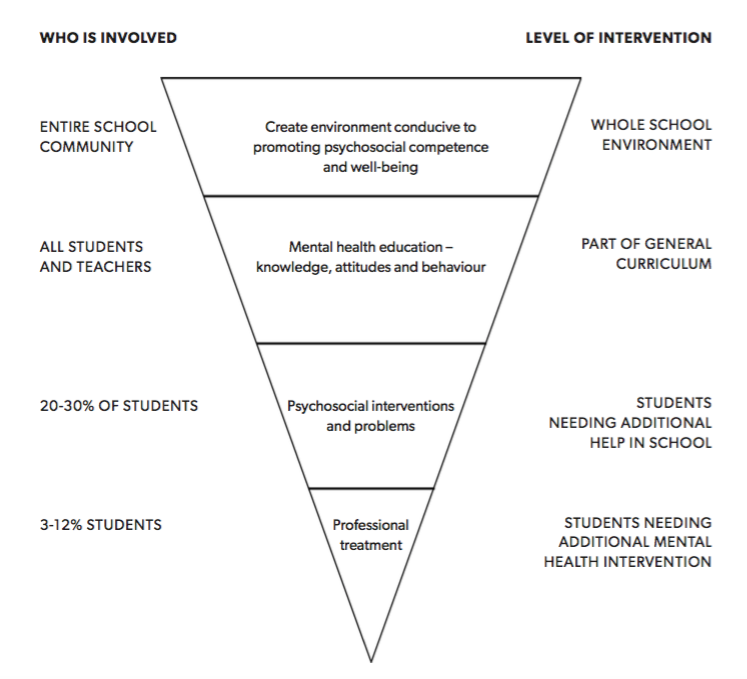
From the time of the early Greeks, physical education included elements of psychological development. Once school health curricula were developed, they usually included some coverage of mental illness and alcohol/substance abuse. However, it was with the emergence of health promoting schools/comprehensive school health that explicit mental health programs were developed. As had happened with comprehensive school health, school-based mental health soon evolved a “whole school and community” framework.
 |
Implementation of school based mental health Mental health literacy
A key way to develop commitment to mental health promotion in the whole school community is to provide mental health literacy training for educators, school staff, students and parents. Using literacy in this way is based on successful health promotion programs that have enhanced health literacy. Mental health literacy is defined as “knowledge and beliefs about mental disorders which aid their recognition, management, or prevention”. Thus literacy encompasses information about mental health problems and what we know about preventing and addressing them.
The goals for mental health literacy campaigns in school contexts are broad:
The effect of exercise on mental health
source : google image
|


No comments:
Post a Comment